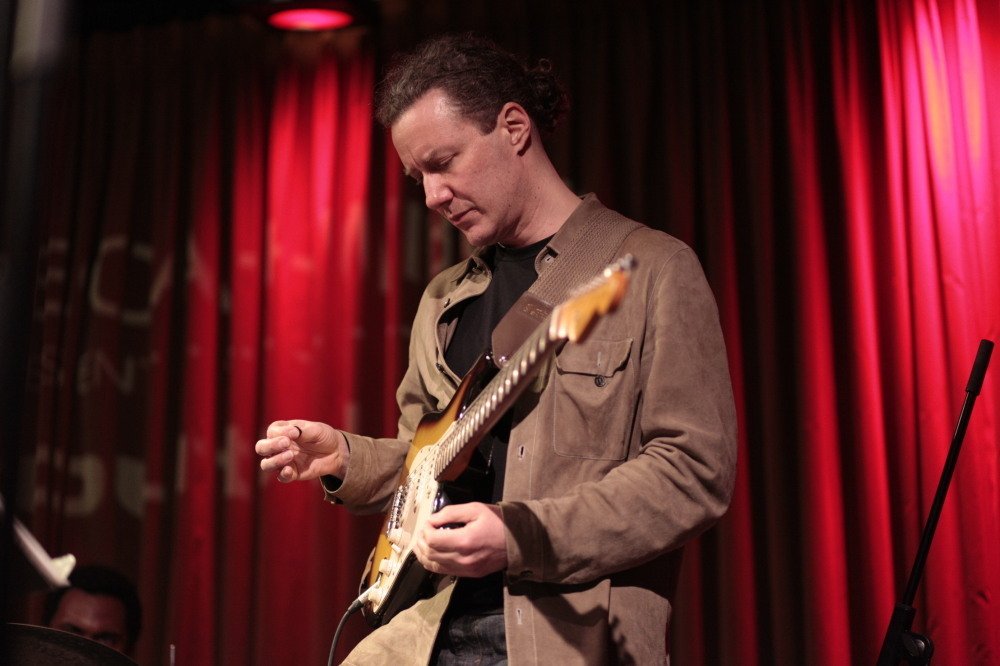
In the pantheon of contemporary jazz guitarists, few players command the respect and admiration that Adam Rogers has earned throughout his illustrious career. A native New Yorker, Adam Rogers has been the guitarist of choice for an array of the some of the greatest names and in jazz, pop and world music: Michael Brecker, Joe Jackson, Cassandra Wilson, Walter Becker, Chris Potter, John Zorn, The Gil Evans Orchestra, The Mingus Orchestra, Norah Jones, Paul Simon, John Patitucci, The SFJazz collective, Gonzalo Rubalcaba, George Coleman, Ravi Coltrane, Brian Blade, Kenny Barron, Marcus Miller, Regina Carter, Phillip Bailey, Christian Mcbride and Billy Childs to name just a few.
Musical Journey and Early Influences

Adam Rogers is an American jazz guitarist. The son of Broadway performers and musicians, he began playing piano and drums at just 5 or 6. He became “obsessed” with Jimi Hendrix and began collecting Hendrix recordings after starting guitar at age 11. He listened a great deal to the Hendrix recordings, and by 14 had learned to play in the style of Hendrix. It was at this time that he was exposed to the music of Charlie Parker, John Coltrane, Miles Davis, and Wes Montgomery and began to study jazz.
This unique musical foundation—beginning with rock’s most innovative guitarist before transitioning to jazz’s greatest masters—would prove formative in shaping Rogers’ distinctive voice. His guitar teachers have included John Scofield and Barry Galbraith. For five years, Rogers studied classical guitar at Mannes School of Music. This classical training added yet another layer to his musical vocabulary, contributing to the sophisticated harmonic understanding that characterizes his playing today.
Technical Mastery and Musical Philosophy
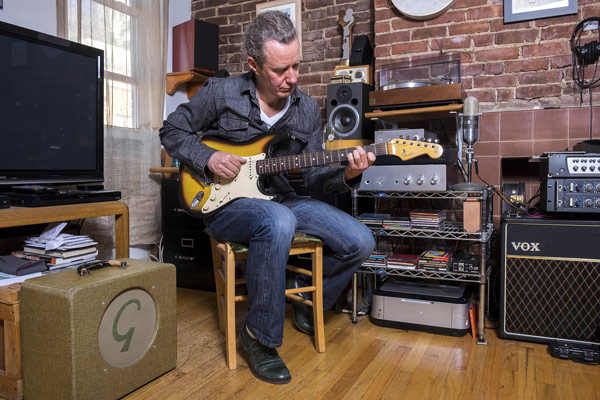
Rogers has developed what critics describe as a distinctive approach to the electric guitar. “Adam is a very rhythmic player; he has great time and he has great feel,” Smith says. “I kind of just watch and try to see where he’s feeling it, and I try to find a place where we can land together.” His sound is characterized by what the press has noted as “a coiled, often vibrato-less tone, legato phrasing and a penchant for polyrhythmic, conversational lines.”
The critical acclaim for Rogers’ technical abilities has been consistent throughout his career. “…his skills as a pure player are absolutely mind-boggling, with long lines and phraseology extending the lineage of Martino, Montgomery and Benson… With Art of the Invisible, he’s accomplished nothing less than raising the bar for all of mainstream jazz guitardom.” – All About Jazz
Notable Collaborations and Career Highlights

Rogers’ career has been marked by high-profile collaborations that showcase his versatility across genres. Beginning in the 1990s, he spent over ten years as a member of the jazz fusion band Lost Tribe with David Binney, David Gilmore, Fima Ephron, and Ben Perowsky. For several years he was a member of Michael Brecker’s bands, and was a founding member of the quartet Forq.
One of the most significant recent developments in Rogers’ career has been his association with the legendary rock-jazz fusion band Steely Dan. Since May 2022 Adam has been a touring member of Steely Dan, joining the band’s current touring lineup that continues to perform their sophisticated blend of rock and jazz.
He has appeared on over Two hundred and fifty albums and toured extensively as a leader and sideman throughout the United States, Canada, Europe, Japan, South America, The Middle East and Russia.
Leadership and Original Projects
While Rogers’ sideman work has brought him widespread recognition, his leadership projects reveal the depth of his compositional abilities. His debut CD, “Art of the Invisible,” was released in 2002 to critical acclaim on Criss Cross Records. Offering up a definitive statement as a composer with eight of his own tunes, the quartet featured on this recording includes Ed Simon on piano, Scott Colley on bass and Clarence Penn on drums.
Rogers has continued to explore different musical territories through various projects. His trio DICE represents a departure from traditional jazz, incorporating elements of rock, funk, and blues. Rogers hung on a repeating rhythmic motif until bassist Fima Ephron and drummer Nate Smith seamlessly recalibrated the tempo, fashioning the syncopated riff into a new beat. This “polyrhythmic language of improvisation,” as Rogers describes it, a parallax effect in tempo, characterizes Rogers’ experimentation with the power-trio format.
Critical Recognition and Industry Standing
The critical consensus places Rogers among the very top tier of contemporary jazz guitarists. “…easily one of the best jazz guitarists in New York…the next step in the tradition of swinging mainstream players in the lineage of Pat Martino and George Benson.” – New York Times
His approach to the instrument has been particularly praised for its musical intelligence. “Adam Rogers specializes in a turbocharged, sleekly designed, ultimately armored brand of postbop. His compositions, with their harmonic and rhythmic feints, can suggest complex spring-loaded devices.” – New York Times
Current Activities and Teaching
Beyond his performing career, Rogers has also established himself as an educator. Guitarist Adam Rogers has played on over two hundred commercially released recordings and has toured extensively with such arists as Michael Brecker, Cassandra Wilson, Norah Jones, Steely Dan, Paul Simon, John Zorn, Randy Brecker, Ravi Coltrane, and David Binney, to name a few. As a bandleader and composer, he has been featured at such venues as the Village Vanguard, the Jazz Standard, and FS Jazz.
Rogers maintains an active touring schedule and continues to push the boundaries of jazz guitar. His work with master classes and educational content helps ensure that his innovative approaches to harmony and rhythm are passed on to the next generation of guitarists.
Legacy and Influence
Adam Rogers represents a unique voice in contemporary jazz guitar—one that seamlessly blends technical virtuosity with deep musical understanding. His ability to move fluidly between straight-ahead jazz, fusion, and more experimental territories while maintaining a distinctive personal sound has established him as one of the most important guitarists of his generation.
“In terms of melodic and rhythmic clarity, Rogers has few peers on the instrument, but his staggering technique is matched by musical sensitivity and a finely honed rapport with his quint[et]” captures the essence of what makes Rogers special: not just his remarkable technical abilities, but his musical maturity and collaborative spirit that continues to make him the guitarist of choice for jazz’s most demanding artists.
As he continues his work with Steely Dan and his own projects, Adam Rogers remains a vital force in contemporary music, constantly evolving while staying true to the deep musical principles that have guided his remarkable career.
